
- The average cost of car insurance per month in the US
- Average car insurance cost by company
- What factors affect car insurance rates?
- Compare car insurance quotes in minutes with Jerry
- Average car insurance rates by age
- Average car insurance cost by vehicle
- Average car insurance rates by driving record
- Average car insurance rates by gender
- How much is full coverage car insurance?
- How to lower your car insurance rates
- Why is car insurance so expensive in 2026?
- Will car insurance rates go down in 2026?
Car insurance costs have risen more than 50% since 2020, according to Bureau of Labor Statistics Consumer Price Index data. This rate increase is largely driven by more expensive vehicles, higher repair costs and increased claim severity, and there’s no sign of it leveling off anytime soon.
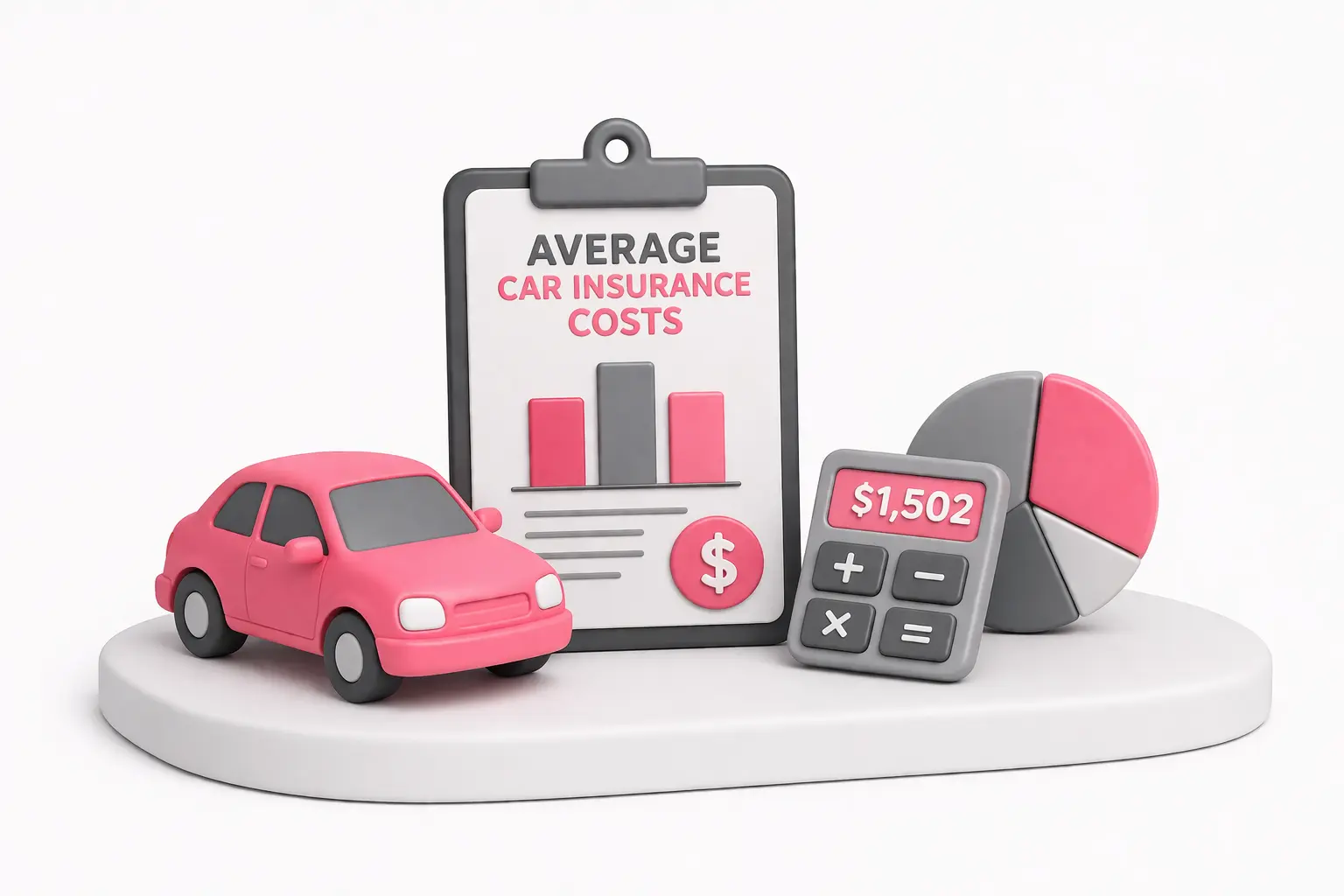
Based on our own data from 1,193,805 drivers in the last year, Jerry has found that drivers pay an average of $2,186 a year for state minimum coverage and $1,916 a year for full coverage.But that’s not the whole story, and there are many different factors that go into average car insurance costs. Who you are, what you drive and where you live all affect how much you’ll pay, so you may fall above or below that average depending on your driving history, location, coverage limits and even the type of vehicle you drive.
Here’s everything you need to know about average auto insurance costs and what to expect as you shop.
Compare 100+ insurers through Jerry in less than 5 minutes
The average cost of car insurance per month in the US
The average cost of car insurance through Jerry is
-
$78 a month and $930 a year for state minimum coverage.
-
$156 a month and $1,916 a year for basic full coverage.
How much you pay depends first on what kind of car insurance coverage you buy. Most drivers choose between two tiers: state-minimum liability coverage (the legal bare minimum required to drive in your state) and full coverage (liability plus comprehensive and collision protection for your own vehicle). According to the Insurance Information Institute, the majority of drivers opt for full coverage.
That said, these are national averages. Your actual rate will vary based on your age, location, vehicle, driving record and other factors covered below. Adding other optional types of car insurance coverage — like roadside assistance, rental reimbursement or gap insurance — will typically increase the price but can be valuable in the event of an accident or breakdown.
Learn more: Car insurance affordability nears a breaking point
How much does car insurance cost right now?
Averages are useful, but what matters most is what real drivers are paying today. Here are some of the most recent full coverage quotes we’ve found for drivers across the country, and how much they saved by switching with Jerry.
Recent quotes nationwide
Based on Jerry customers with clean driving records who received quotes in the past 12 months. Savings depend on coverage, location, and other factors. Potential savings will vary.
Savings depend on coverage and other factors. Potential savings will vary.
Average car insurance cost by company
The insurance company you choose is one of the biggest factors in what you pay, the difference between the cheapest and most expensive quote for the same driver can be significant. Here’s how average car insurance costs compare across the major carriers Jerry quotes, based on policies from the past 12 months.
Average cost by insurer
|
Insurer
|
Average monthly cost
|
Average annual cost
|
|---|
|
Insurer
|
Average monthly cost
|
Average annual cost
|
|---|---|---|
| $83 | $995 | |
| $157 | $1,885 | |
| $166 | $1,992 | |
| $200 | $2,401 | |
| $207 | $2,486 | |
| $210 | $2,518 | |
| $211 | $2,537 | |
| $216 | $2,590 | |
| $230 | $2,761 | |
| $235 | $2,816 | |
| $240 | $2,881 | |
| $241 | $2,895 | |
| $248 | $2,976 | |
| $258 | $3,102 | |
| $261 | $3,134 | |
| $269 | $3,229 | |
| $284 | $3,413 | |
| $294 | $3,533 | |
| $310 | $3,719 | |
| $328 | $3,933 | |
| $332 | $3,989 | |
| $334 | $4,012 | |
| $346 | $4,148 | |
| $366 | $4,390 | |
| $367 | $4,398 | |
| $368 | $4,420 | |
| $421 | $5,049 |
Based on Jerry customers with clean driving records who received quotes in the past 12 months. Savings depend on coverage, location, and other factors. Potential savings will vary.
These averages reflect all driver profiles across all coverage levels, and the cheapest company for one driver isn’t always the cheapest for another. Rates are highly personalized based on your age, location, vehicle and driving history. The only way to know which carrier is cheapest for you specifically is to shop around and compare quotes from multiple carriers, which Jerry can help you do.
Learn more: How to find cheap car insurance
What factors affect car insurance rates?
Car insurance is one of the most personalized financial products you’ll ever buy. Even two drivers living on the same street with the same car can pay very different rates. Here are the main pricing factors insurers use, and why the average cost may not match what you see when you get a quote.
How does age affect car insurance rates?
Age is one of the biggest pricing factors, especially at the extremes. Adult drivers between 18 and 20 pay the most — an average of $288 a month and $3,488 a year for basic full coverage — because younger drivers statistically cause more accidents, according to the NHTSA. Rates drop steadily through your 20s and 30s, bottom out in your 50s and start creeping back up after 65. We’ll break down costs for each age group in detail below.
Read Jerry’s study of the average car insurance costs by age
How does your driving record affect car insurance?
Accidents, speeding tickets and DUI convictions can follow you for three to seven years on your record, depending on severity and state. Not all carriers penalize these infractions equally, which is why comparing quotes matters even more when your record isn’t clean. We’ll cover average costs by violation type further down.
How does location affect car insurance rates?
Where you live matters more than most people realize. Densely populated cities tend to have more accidents, thefts and vandalism, which pushes rates higher. State-level factors play a big role too: local insurance laws, weather risks and the percentage of uninsured drivers on the road all contribute to pricing.
States like Michigan and Florida consistently rank among the most expensive for car insurance, according to the Insurance Information Institute, while North Dakota and Maine are typically among the cheapest.
Read Jerry’s study of the average car insurance cost per month by state
How does your car affect insurance rates?
The make, model, age and safety features of your vehicle directly affect your premium. More expensive cars cost more to repair or replace, which means higher insurance costs. Sports cars and luxury vehicles tend to carry the highest premiums, while midsize sedans, small SUVs and minivans with strong safety ratings are typically the cheapest to insure.
Does your credit score affect car insurance?
In 46 states and Washington D.C., insurers use a version of your credit history called a credit-based insurance score to help set rates. The four exceptions are California, Hawaii, Massachusetts and Michigan, where this practice is prohibited. If your credit has improved recently, it’s worth getting fresh quotes, as the savings can be significant.
Compare car insurance quotes in minutes with Jerry
You’ve seen the averages. Now see how your rate compares. Tell us a little about yourself and your car, and Jerry will compare real quotes from 100+ insurers in about two minutes. No one will call you, we never sell your information and there’s zero obligation.
If we find coverage that saves you money, we can help you switch and even cancel your existing policy. And if you have questions along the way — about coverages, what you actually need or anything else — our licensed agents are just a call or live chat away.
See coverage options for your car.
Average car insurance rates by age
The average cost of car insurance through Jerry ranges from $288 per month for drivers 18 to 20 down to $133 per month for drivers 45 to 54 and $120 for drivers 65 and older. Both younger and older drivers have higher crash rates and more fatalities per crash than middle-aged drivers, according to the NHTSA and National Safety Council, which translates directly into higher premiums.
Average cost of full coverage by age
|
Age
|
Average monthly cost
|
Average annual cost
|
|---|
|
Age
|
Average monthly cost
|
Average annual cost
|
|---|---|---|
| 14 | $441 | $5,289 |
| 15 | $505 | $6,055 |
| 16 | $652 | $7,828 |
| 17 | $621 | $7,454 |
| 18 | $657 | $7,881 |
| 19 | $611 | $7,337 |
| 20 | $566 | $6,794 |
| 21 | $508 | $6,091 |
| 22 | $458 | $5,491 |
| 23 | $433 | $5,198 |
| $240 | $2,881 | |
| $241 | $2,895 | |
| $248 | $2,976 | |
| $258 | $3,102 | |
| $261 | $3,134 | |
| $269 | $3,229 | |
| $284 | $3,413 | |
| $294 | $3,533 | |
| $310 | $3,719 | |
| $328 | $3,933 | |
| $332 | $3,989 | |
| $334 | $4,012 | |
| $346 | $4,148 | |
| $366 | $4,390 | |
| $367 | $4,398 | |
| $368 | $4,420 | |
| $421 | $5,049 |
Based on Jerry customers age 18+ with clean driving records who received quotes in the past 12 months. Savings depend on coverage, location, and other factors. Potential savings will vary.
If you’re a younger or older driver paying above these averages, it’s especially worth comparing quotes. Some carriers are significantly more competitive for specific age groups, and discounts for good student status, defensive driving courses and telematics programs can help bring your rate down.

See coverage options for your car in minutes.
Average car insurance cost by vehicle
There’s a big delta between the cheapest vehicles to insure through Jerry and the most expensive — a difference driven largely by repair costs, replacement values and theft rates. More affordable vehicles tend to have cheaper, more readily available parts, simpler repairs and lower replacement values, all of which reduce claim costs… and, in turn, your premium.
Cheapest cars to insure
These are the least expensive vehicle makes among Jerry drivers, listed by average car insurance quote.
|
Make
|
Average monthly cost
|
Average annual cost
|
|---|
|
Make
|
Average monthly cost
|
Average annual cost
|
|---|---|---|
| $104 | $1,248 | |
| $124 | $1,490 | |
| $126 | $1,518 | |
| $143 | $1,712 | |
| $158 | $1,890 | |
| $168 | $2,016 | |
| $169 | $2,029 | |
| $192 | $2,310 | |
| $196 | $2,352 | |
| $196 | $2,355 | |
| $197 | $2,369 | |
| $203 | $2,431 | |
| $209 | $2,502 | |
| $212 | $2,545 | |
| $221 | $2,646 | |
| $221 | $2,649 | |
| $223 | $2,676 | |
| $226 | $2,710 | |
| $227 | $2,722 | |
| $228 | $2,740 | |
| $332 | $3,989 | |
| $334 | $4,012 | |
| $346 | $4,148 | |
| $366 | $4,390 | |
| $367 | $4,398 | |
| $368 | $4,420 | |
| $421 | $5,049 |
Based on Jerry customers with clean driving records who received quotes in the past 12 months.
These are the most expensive vehicle makes among Jerry drivers, listed by average car insurance quote.
Most expensive cars to insure
|
Make
|
Average monthly cost
|
Average annual cost
|
|---|
|
Make
|
Average monthly cost
|
Average annual cost
|
|---|---|---|
| $1,061 | $12,729 | |
| $866 | $10,391 | |
| $827 | $9,922 | |
| $781 | $9,374 | |
| $722 | $8,669 | |
| $661 | $7,928 | |
| $646 | $7,756 | |
| $608 | $7,301 | |
| $605 | $7,256 | |
| $593 | $7,119 | |
| $197 | $2,369 | |
| $203 | $2,431 | |
| $209 | $2,502 | |
| $212 | $2,545 | |
| $221 | $2,646 | |
| $221 | $2,649 | |
| $223 | $2,676 | |
| $226 | $2,710 | |
| $227 | $2,722 | |
| $228 | $2,740 | |
| $332 | $3,989 | |
| $334 | $4,012 | |
| $346 | $4,148 | |
| $366 | $4,390 | |
| $367 | $4,398 | |
| $368 | $4,420 | |
| $421 | $5,049 |
Based on Jerry customers with clean driving records who received quotes in the past 12 months.
How do electric cars affect insurance rates?
Electric vehicles like Teslas tend to cost more to insure than gas-powered equivalents. The main reasons are higher replacement part costs, fewer repair shops equipped to work on EVs and expensive battery packs that can be totaled by relatively minor damage. As EV adoption grows, insurers are actively adjusting their risk models — but for now, the pricing gap remains. Rates vary widely by carrier, so comparing quotes is especially important if you drive an electric vehicle.
If you’re shopping for a new car, it’s worth getting insurance quotes before you buy. Jerry can quote you on a vehicle you don’t own yet, so you can factor insurance costs into your purchase decision.

It only takes 2 minutes to sign up at Jerry.
Average car insurance rates by driving record
Driving violations can be costly, whether it’s for speeding, DUI or reckless driving. And as the number of driving violations on your record goes up, so does your average car insurance cost.
Average cost of full coverage with an accident
Based on Jerry customers with one or more accidents but no violations, who received quotes in the past 12 months. Savings depend on coverage, location, and other factors. Potential savings will vary.
Drivers with a clean record pay less for coverage than drivers with violations or a history of at-fault accidents. While Jerry drivers with clean records pay an average of $128, an at-fault accident raises that average to $146 per month, and a DUI can push it to $283 per month or more. The impact varies based on the type of violation, how recent it was and how many you have.
Average cost of full coverage with violations
|
Violation
|
Average monthly cost
|
Average annual cost
|
|---|
|
Violation
|
Average monthly cost
|
Average annual cost
|
|---|---|---|
| Open Container | $353 | $4,232 |
| Wrong Way/Wrong Lane | $346 | $4,157 |
| Illegal Turn | $337 | $4,043 |
| Driving on Sus. License | $311 | $3,735 |
| Failure to Obey Traffic Sign | $310 | $3,716 |
| DUI | $304 | $3,650 |
| Improper Passing | $304 | $3,645 |
| Reckless Driving | $294 | $3,524 |
| Eluding Police | $293 | $3,512 |
| Speeding over 15 | $291 | $3,490 |
| Speeding under 15 | $291 | $3,488 |
| Leaving scene of an Accident/Hit and Run | $285 | $3,415 |
| Careless Driving | $269 | $3,225 |
| Seat Belt | $242 | $2,902 |
| Passing School Bus | $235 | $2,824 |
| Defective Equipment | $226 | $2,706 |
| Racing/Drag Racing | $188 | $2,254 |
| $226 | $2,710 | |
| $227 | $2,722 | |
| $228 | $2,740 | |
| $332 | $3,989 | |
| $334 | $4,012 | |
| $346 | $4,148 | |
| $366 | $4,390 | |
| $367 | $4,398 | |
| $368 | $4,420 | |
| $421 | $5,049 |
Based on Jerry customers with no accidents but one or more violations on their driving record, who received quotes in the past 12 months.
A violation on your record doesn’t mean you’re stuck with high rates forever. Different carriers weigh infractions very differently, and most violations stop affecting your rate after three to five years. If you have a violation that’s about to drop off, set a reminder to shop for new quotes as soon as it does… the savings can be immediate and substantial. Jerry can also remind you when it’s time to shop for coverage after an improved driving record.
Get personalized car insurance rates now.
Average car insurance rates by state
Your location plays a big role in your cost for auto insurance. Some states are more populated with busy highways, and therefore pose more risk to drivers. Others might be prone to natural disasters, higher rates of theft or have above-average numbers of uninsured drivers.
Here’s a look at how your state can affect what you pay for auto insurance.
Average cost of insurance by state
|
State
|
Average monthly cost
|
Average annual cost
|
|---|
|
State
|
Average monthly cost
|
Average annual cost
|
|---|---|---|
| $175 | $2,105 | |
| $173 | $2,074 | |
| $205 | $2,459 | |
| $265 | $3,177 | |
| $237 | $2,838 | |
| $298 | $3,577 | |
| $345 | $4,145 | |
| $258 | $3,091 | |
| $255 | $3,055 | |
| $343 | $4,116 | |
| $126 | $1,511 | |
| $130 | $1,564 | |
| $205 | $2,464 | |
| $165 | $1,981 | |
| $187 | $2,242 | |
| $301 | $3,606 | |
| $266 | $3,190 | |
| $420 | $5,035 | |
| $373 | $4,481 | |
| $136 | $1,634 | |
| $314 | $3,764 | |
| $200 | $2,400 | |
| $287 | $3,442 | |
| $182 | $2,183 | |
| $137 | $1,648 | |
| $201 | $2,411 | |
| $178 | $2,141 | |
| $210 | $2,521 | |
| $100 | $1,195 | |
| $374 | $4,489 | |
| $150 | $1,803 | |
| $293 | $3,512 | |
| $569 | $6,826 | |
| $183 | $2,197 | |
| $190 | $2,278 | |
| $218 | $2,611 | |
| $241 | $2,892 | |
| $193 | $2,318 | |
| $310 | $3,723 | |
| $247 | $2,960 | |
| $177 | $2,118 | |
| $277 | $3,324 | |
| $212 | $2,540 | |
| $251 | $3,010 | |
| $94 | $1,131 | |
| $220 | $2,636 | |
| $161 | $1,932 | |
| $225 | $2,697 | |
| $187 | $2,240 |
Based on Jerry customers with clean driving records who received quotes in the past 12 months.
Select your state below to learn more about car insurance requirements, the best local carriers and how to find the cheapest rates near you.
How does your credit score affect car insurance rates?
Many states allow insurers to use drivers’ credit histories to help set car insurance rates. Some research has shown a correlation between lower credit scores and higher rates of car insurance claims claims. A driver’s credit score can also give carriers a snapshot into their history of on-time payments, which is critical for insurance; if a policy lapses, coverage becomes void.
Drivers with credit scores above 750 pay an average of $120 per month through Jerry, while drivers with scores below 550 pay an average of $128 per month. In most states, your credit-based insurance score is one of the most significant rate factors insurers use.
Research has shown a correlation between lower credit scores and higher claim frequency, which is why insurers in 46 states and Washington D.C. are permitted to factor it into rates. The four exceptions are California, Hawaii, Massachusetts, and Michigan.
Average cost of insurance by credit score
Based on Jerry customers with clean driving records who received quotes in the past 12 months.
If your credit has improved recently (or if you’re actively working on it) getting fresh quotes can unlock meaningful savings. Even moving from the 550 to 659 range into the 660+ range can make a noticeable difference in what you pay.
Learn more: Credit-based insurance scores

Jerry pulls up to 20 quotes from top rated carriers.
Average car insurance rates by gender
In states where gender-based pricing is permitted, male drivers typically pay 12% more per month than female drivers on average through Jerry. Insurers in most states factor gender into rates because statistical data shows differences in claim frequency and severity across gender groups, particularly for younger drivers.
Note that six states (California, Hawaii, Massachusetts, Michigan, North Carolina and Pennsylvania) prohibit insurers from using gender as a pricing factor. If you live in one of these states, gender will not affect your rate.
How much is full coverage car insurance?
The average cost of full coverage car insurance through Jerry is $156 per month, but your actual rate will vary based on the factors outlined above. Full coverage combines liability insurance with comprehensive and collision coverage, protecting both other drivers and your own vehicle. It may also include coverages like uninsured/underinsured motorist (UM/UIM), personal injury protection (PIP), medical payments and more.
Full coverage is the most common choice among drivers, according to III data, and is typically required if you’re financing or leasing.
Average cost of insurance by age group
Based on Jerry customers with clean driving records who received quotes in the past 12 months.
The price difference between minimum and full coverage can be smaller than people expect, but the protection gap is enormous. Many states require as little as $10,000 in property damage liability, though that’s nowhere near enough to cover the cost of a totaled car in a modern accident.
Jerry Recommends: Buy as much coverage as you can comfortably afford. A good starting point is $100K/$300K/$100K in liability limits, along with comprehensive and collision coverage and uninsured/underinsured motorist protection (UM/UIM).
Learn more: Liability-only vs. full coverage insurance
Jerry helps you save on car insurance fast.
How to lower your car insurance rates
Understanding what you’re paying is one thing, but actually paying less is another. Here are the most effective ways to lower your rate, based on what we see across tens of thousands of Jerry quotes every month.
-
Compare quotes from multiple carriers. This is the single most effective thing you can do, as the difference between the cheapest and most expensive quote for the same driver can translate to hundreds of dollars a year. Jerry makes this easy by comparing quotes from 100+ carriers in less than five minutes.
-
Bundle your policies. Bundling home and auto coverage saves Jerry customers an average of 40%. Jerry’s mix-and-match approach even lets you buy two separate policies from different companies, so you get the best individual coverages at the best total price.
-
Raise your deductible. Increasing your deductible typically saves money on your comprehensive and collision premiums. Just make sure you could actually pay that deductible out of pocket if you needed to file a claim.
-
Improve your credit. If you’re in a state where credit-based insurance scoring is allowed (46 states plus D.C.), paying down balances and correcting credit report errors can meaningfully lower your rate over time.
-
Ask about every discount. Carriers rarely volunteer all their discounts, but through Jerry, you’ll automatically be matched with every discount you’re eligible for. This includes things like good student, defensive driving, low mileage, paperless billing, paid-in-full, telematics and multi-vehicle discounts.
-
Consider usage-based or pay-per-mile insurance. If you don’t drive much, a usage-based program could save you significantly. These programs use telematics to track your actual driving behavior or mileage and adjust your rate accordingly. Many carriers now offer some version of this, and Jerry can help you compare options.
-
Don’t let your coverage lapse. Even a short lapse in coverage flags you as higher risk to future insurers. If you’re not driving for a while, ask about a storage or non-owner policy to maintain continuous coverage for less.
-
Re-quote at the right times. There are three moments when it especially pays to shop: at every renewal (every 6 or 12 months), after a violation drops off your record (usually around three years) and when you cross key age thresholds (especially 25 and 65). Set a calendar reminder before each renewal, or buy through Jerry and we’ll automatically check rates for you before your policy renews.
Learn more: Top ways to save on car insurance
Why is car insurance so expensive in 2026?
Average car insurance costs have risen roughly 55% since 2020, according to the Bureau of Labor Statistics. This is largely driven by a combination of factors that are unlikely to reverse quickly, which means these higher rates probably aren’t going away anytime soon.
Here’s what’s behind the increases.
Repair and replacement costs
Modern vehicles are more complex and expensive to fix than ever. According to the LexisNexis 2025 Auto Insurance Trends Report, material damage claim severity rose 47% and total loss claims increased to 29% between 2020 and 2025. Advanced driver-assistance systems, cameras, sensors, and specialized materials mean even a low-speed collision can result in thousands of dollars in repairs. The Bureau of Labor Statistics reports that auto repair costs have jumped more than 43% since 2019, and labor shortages in repair shops have driven wages higher, adding further pressure.
Climate and catastrophic losses
From wildfires in the west to hurricanes in the southeast, extreme weather events have increased in both frequency and severity. According to the CCC Intelligent Solutions Crash Course Q2 2024 report, hail-related auto claims rose to 11.8% of all comprehensive claims in 2023, up from 9% in 2020, and average repair costs for hail-damaged vehicles increased 15% over the same period.
These losses don’t just affect drivers in impacted areas, they raise costs for carriers across entire states and regions. And when you consider that hail claims are on average 21.7% more costly to repair than the average comprehensive claim and 25.6% costlier than the average repairable claim, it’s easy to see why these increases get passed on to customers.
More distracted and dangerous driving
Traffic fatalities surged during the pandemic, jumping 10.5% in 2021 alone to their highest level since 2005, according to NHTSA. The trend is reversing, though: NHTSA’s most recent data shows fatalities declined 6.4% through the first nine months of 2025, marking the 14th consecutive quarterly decline.
That said, the damage to insurance pricing has already been baked in. Years of elevated crash severity, higher medical costs and increased litigation have pushed carriers to raise rates significantly, and those increases don’t automatically reverse just because crashes are declining.
Will car insurance rates go down in 2026?
It’s unlikely that rates will drop meaningfully in the short term. According to the Bureau of Labor Statistics, the motor vehicle insurance CPI rose 5.9% year-over-year as of February 2026 — down from a peak of nearly 20% in mid-2023, but still well above headline inflation of 2.4%. Repair cost inflation remains elevated, and the insurance industry is still absorbing years of catastrophic weather losses.
That said, some carriers are adjusting faster than others, which means the pricing spread between companies is wider than it’s been in years. According to LexisNexis, nearly half of all auto insurance policies in force (47%) were shopped at least once in the 12 months ending Q4 2025, a new all-time high since the company began tracking. The potential savings from switching have never been greater.

Drivers who switch with Jerry save an average of $54/mo on car insurance.
FAQ
-
How much is car insurance per month?
-
Is $200 a month expensive for car insurance?
-
Is $100 a month good for car insurance?
-
How much should car insurance cost?
-
Does car insurance go down when your car is paid off?
-
Does car insurance go down at 25?
-
Who typically pays the most for car insurance?
-
Why is my car insurance so high?
-
What’s the difference between full coverage and minimum coverage?
-
Will switching car insurance companies raise my rate?
-
Why did my car insurance go up without an accident?
Methodology
Data included in this analysis comes from policies that Jerry has quoted within the last 6 months for drivers with a clean record and that have full coverage, unless stated otherwise. Data related to violations, accidents or credit scores pull from quote data from the last 18 months. Jerry services 48 states and offers a range of insurance companies to choose from. Read Jerry’s car insurance data methodology to learn more about how we collect, verify and share real-world insurance data.

Stephanie Colestock is a professional writer, CFEI®, and licensed insurance agent specializing in personal finance. With over 14 years of experience, she crafts insightful and accessible content on a wide range of financial topics, including insurance, loans, credit/debt, investing, retirement planning, and banking.
Her bylines appear in top-tier publications such as TIME, Fortune, MSN, Business Insider, USA Today, Money, Fox Business, and CBS. Stephanie’s deep understanding of complex financial concepts and her ability to communicate them clearly have made her a trusted voice in the industry.
When she’s not writing, Stephanie enjoys SCUBA diving, reading a good book, and traveling the world with her family.